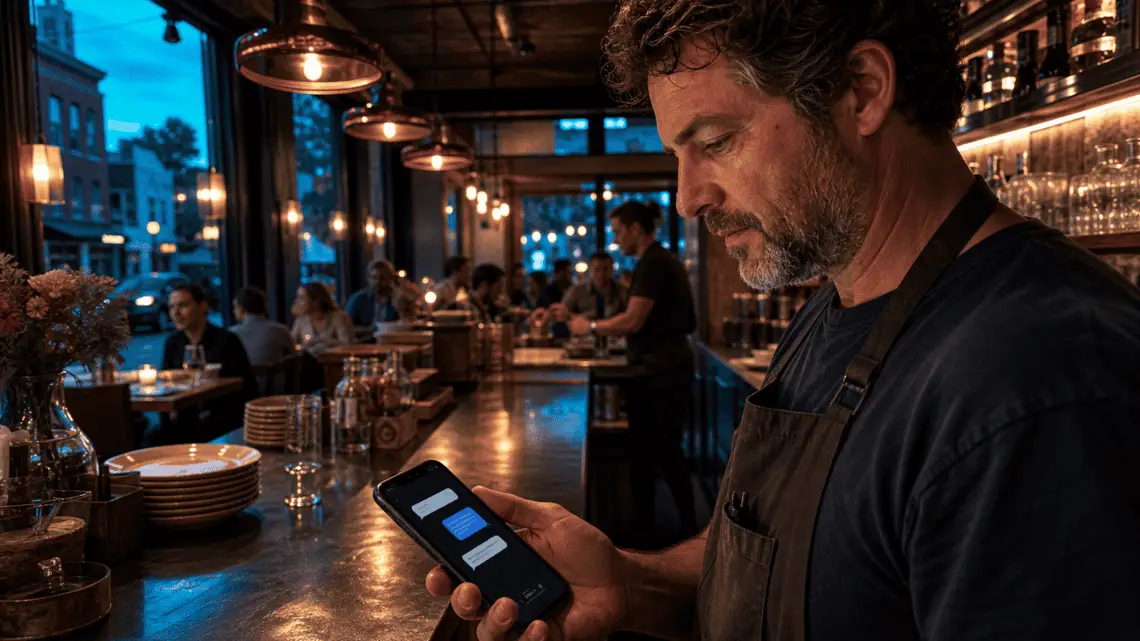
A good SMS marketing strategy starts from an uncomfortable premise: text messages are read almost immediately, which means the channel cannot be improved by sending more of them. Every other channel rewards persistence to some degree. SMS punishes it faster than anything else you run.
This guide covers where SMS genuinely outperforms email, the consent rules you cannot design around, how to structure a program that is mostly triggered rather than broadcast, how to write inside a character limit, and how to measure a channel that costs real money per message.
Why SMS Works, and Why That Is Dangerous
SMS gets opened in minutes, has no spam folder, no promotions tab, and no rendering problems. Those advantages are also the risk profile. There is no low-attention way for a customer to ignore your message, so an irrelevant text does not get skipped, it gets resented.
The channel also carries a per-message cost, which is unusual in modern marketing and quietly useful. It forces prioritization. If a message is not worth a few cents multiplied by your list size, it belongs in email.
Consent and Compliance Come First
SMS is the most regulated channel most marketers touch, and the penalties are per message rather than per incident. In the United States, promotional texting generally requires prior express written consent that is specific to SMS, clearly disclosed, and not bundled into a general terms acceptance. Carriers layer their own requirements on top of the law, including registration of your sending numbers and content restrictions in sensitive categories.
The operational essentials look like this in practice.
- Separate, explicit SMS consent. A checkbox for email does not cover texting, and a pre-checked box does not count as consent.
- Disclose terms at the point of signup. Message frequency, that rates may apply, and how to stop.
- Honor every opt-out keyword instantly and confirm it once, including variations beyond the standard word.
- Respect quiet hours in the recipient’s local time zone, not your office’s.
- Register your numbers and keep your registered use case aligned with what you actually send.
- Keep auditable consent records with timestamp, source, and the exact language shown.
This is general guidance rather than legal advice, and rules change. Have counsel review your program, particularly if you operate internationally, where consent standards are often stricter. The underlying philosophy is the same one behind consent in email and SMS marketing: permission is an asset you maintain, not a hurdle you clear once.
What Belongs in SMS and What Belongs in Email
| Message type | Best channel | Why |
|---|---|---|
| Order and shipping updates | SMS | Time-sensitive, expected, high value |
| Appointment reminders | SMS | Immediate action, low tolerance for delay |
| Flash sale, last few hours | SMS | Urgency is the entire point |
| Back in stock for a saved item | SMS or push | Requested, personal, perishable |
| Newsletter and education | Needs length and images | |
| Product launch detail | Requires explanation and visuals | |
| Loyalty balance and tier changes | Push or email | Reference information, not urgent |
| Win-back sequences | Email first | Needs room to make a case |
The pattern is consistent. SMS carries moments that lose value with delay. Email carries anything that needs explaining. Push sits between them for app users, and the differences are covered in push notification best practices. Coordinating all three so a customer does not get three versions of the same message is the point of omnichannel orchestration.
Building the List Without Poisoning It
The highest-quality SMS subscribers come from moments where texting is obviously the right channel: opting into shipping updates, requesting a back-in-stock alert, or joining a loyalty program. Those subscribers arrive with a clear expectation, which is exactly what keeps opt-out rates low.
The lowest-quality subscribers come from discount-driven popups that collect a phone number for ten percent off. They convert once and then either ignore or leave. If you use an incentive, follow it with a genuinely useful first thirty days rather than a discount treadmill, and watch the ninety-day retention of that cohort separately from the rest of your list.
Program Architecture: Mostly Triggered, Occasionally Broadcast
The healthiest SMS programs are roughly eighty percent triggered and twenty percent broadcast. Triggered messages are relevant by construction, which is why they sustain the channel.
- Welcome and expectation setting. One message confirming what they will receive and how often.
- Transactional lifecycle. Order confirmation, shipping, delivery, and issue alerts.
- Cart and browse recovery. One reminder, occasionally a second, never a third.
- Replenishment. Timed to actual consumption, which makes it feel like service rather than marketing.
- Requested alerts. Back in stock, price drop, restock of a saved item.
- Loyalty milestones. Reward earned or expiring, where the customer has a real stake.
- Time-boxed broadcasts. A small number of genuine urgency moments per quarter, not per week.
Writing Inside 160 Characters
Lead with the brand name so the message is identifiable, then the single specific thing, then one link, then the opt-out where required. Cut greetings, cut adjectives, and cut anything that could be inferred. One message, one action, one link.
Two technical details worth respecting. Use a branded short link on your own domain, because generic shorteners raise carrier filtering risk and reduce trust. And keep messages under the segment limit where you can, since going over splits the message and doubles the cost for the same content.
Cadence and Frequency
Four to six messages a month is a reasonable ceiling for most retail programs, and many healthy programs sit lower. Set a global frequency cap that no individual campaign can override, enforce a minimum gap between messages, and give transactional messages priority over promotional ones when both are eligible.
Then watch the leading indicator, which is opt-out rate by weekly message volume rather than by campaign. Complaints and unsubscribes in SMS rise before revenue falls, so the channel tells you it is being overused while there is still time to correct.
Measuring SMS Honestly
Track click-through rate, conversion rate, revenue per message sent, opt-out rate, and cost per conversion including message spend. Revenue per message sent is the metric that keeps the program disciplined, because it falls the moment you start sending marginal messages to a list that is already engaged.
Use holdout groups. SMS is the channel most likely to claim credit for purchases that were already going to happen, since it typically reaches your most loyal customers at the moment they were closest to buying. Without a holdout you cannot separate influence from coincidence, which is the same problem discussed in data-driven decision making.
The Cost Model
Unlike email, SMS has a real marginal cost, so the arithmetic is simple and clarifying. Multiply your per-message rate by list size to get the cost of a broadcast, then compare it to expected incremental revenue rather than attributed revenue. Many teams discover that their broadcast program is roughly break-even while their triggered program carries the entire return, which is a strong argument for shifting the mix rather than growing the list.
Mistakes That Cost the Most
- Treating an email opt-in as SMS consent, which is a compliance problem rather than a growth tactic.
- Sending broadcasts on an email cadence, which trains people to opt out.
- Ignoring local time zones on a national or global list.
- Using generic link shorteners that increase filtering risk.
- Collecting numbers with a discount and then never providing non-promotional value.
- No frequency cap, so transactional and promotional messages stack on the same afternoon.
- Measuring attributed revenue with no holdout, then scaling a program that was never incremental.
Frequently Asked Questions About SMS Marketing
How often should I send marketing texts?
Most retail programs sustain four to six messages a month, with the majority triggered rather than broadcast. Find your own ceiling by watching opt-out rate against weekly volume.
Do I need separate consent for SMS and email?
Yes. Consent must be specific to the channel, clearly disclosed, and separately given. A single combined checkbox is a common and serious compliance gap.
What is a good SMS opt-out rate?
Under two percent per campaign is generally healthy. A sustained rise is the earliest reliable signal that your frequency or relevance has slipped.
Is SMS better than email?
It is better at urgency and worse at everything requiring length or explanation. The two are complements, and programs that treat SMS as a faster email tend to burn the list.
Should transactional and marketing messages use the same number?
Separating them is safer. It protects delivery of messages customers need, keeps your registered use cases clean, and lets someone opt out of promotions without losing shipping updates.
Final Thoughts
An effective SMS marketing strategy is mostly an exercise in restraint. Get explicit consent, keep the program predominantly triggered, cap frequency and respect it, write one message with one action, and judge the channel on incremental revenue per message rather than on attributed totals. SMS is the closest thing to a direct line to your customer, and the fastest way to lose it is to use it too often.